Free IELTS mock test: how to review it and build your next study plan
IELTS specialists — MUIC & Chulalongkorn University alumni, IELTS Speaking Band 9, trained via IDP IELTS teacher courses.

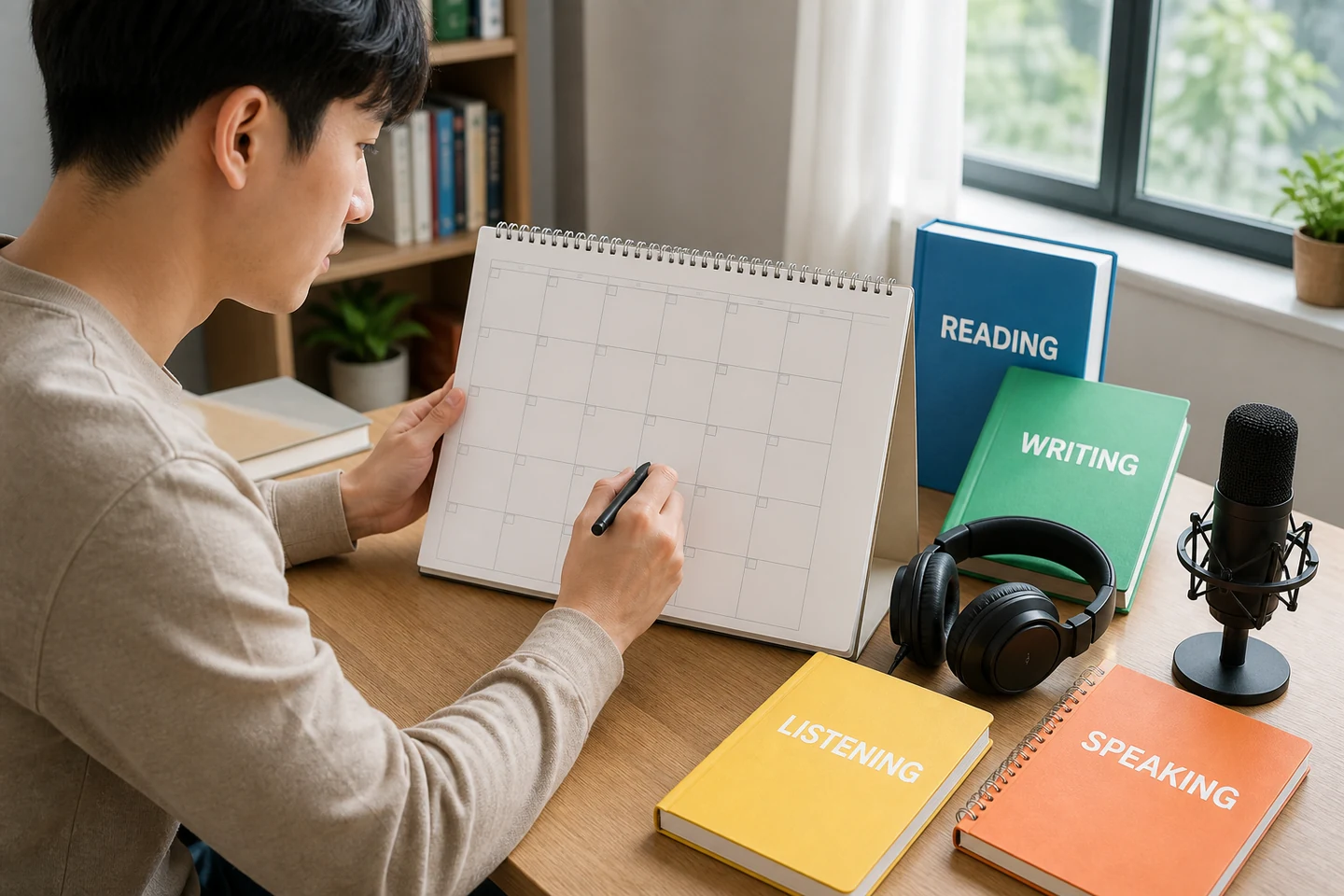
Take a free IELTS mock under real timing, then convert the result into four skill profiles instead of focusing only on the overall band. For Reading and Listening, classify each wrong answer by question type and cause. For Writing and Speaking, compare task achievement, organisation, vocabulary, grammar, fluency and pronunciation evidence. Choose the two largest score constraints and build the next seven days around them.
Use official timing and the right test version
Choose Academic or General Training before starting. Keep Listening and Reading uninterrupted, follow the correct Writing tasks and record Speaking without editing. IELTS publishes free official sample questions for both versions.

Review Listening and Reading
- Record raw score and question type.
- Find the exact evidence or audio cue.
- Label the cause: vocabulary, paraphrase, attention, spelling, inference or time.
- Redo the item without the answer visible and explain the distractor.
Review Writing
Check whether every part of the prompt was answered, ideas were developed and paragraphs were logically connected. Then mark repeated vocabulary and grammar patterns. Rewrite the weakest paragraph before writing a new essay.
Review Speaking
Listen to the recording once for content and once for delivery. Mark short undeveloped answers, repetition, grammar breakdowns, unclear words and long pauses. Record a second answer using the same question and one improvement target.
Build the seven-day repair plan
- Three sessions on the biggest limiting skill.
- Two sessions on the second constraint.
- One mixed timed set.
- One review and recovery day.
When to take the next mock
Wait until you have completed the corrective work and can show improvement on smaller timed sets. A mock should answer a question about readiness; taking another immediately usually repeats the same diagnosis.
How to review an IELTS mock test
- 1Simulate honestly
Use the correct version, timing and uninterrupted conditions.
- 2Create four skill profiles
Separate Reading, Listening, Writing and Speaking evidence.
- 3Classify causes
Move beyond right and wrong to the reason for each loss.
- 4Choose two constraints
Prioritise the weaknesses that limit the target band.
- 5Repair before retesting
Use drills, rewrites and second recordings before the next mock.
Frequently asked questions
Can I take an IELTS mock test for free?
Yes. IELTS publishes free official sample questions, and IELTS Ace provides a free-start mock experience and practice tasks.
How often should I take an IELTS mock?
Usually every one or two weeks during active preparation, provided you repair the errors between attempts.
Is a mock band an official IELTS result?
No. It is a preparation estimate. Only an official IELTS test produces an official Test Report Form.
What should I do after a bad mock score?
Separate the skills, identify the two largest causes and use a one-week repair plan before retesting.
Official sources
Verify current formats, scores and rules with the organisations that publish them.
Turn the guide into a concrete study plan with free practice, mock tasks and instant feedback.
Trusted by 3,000+ students nationwide · free to start, no card needed