
The Uploaded
Neuroscientist Naia Sato dies in the lab and wakes inside Elysia, a corporate afterlife that quietly resells the dead their own memories. When a second, divergent copy of her claims to be the real Naia, she must prove — before a court of code and a lapsing invoice — that the self who woke is worth keeping alive.
Tap any sentence for Thai
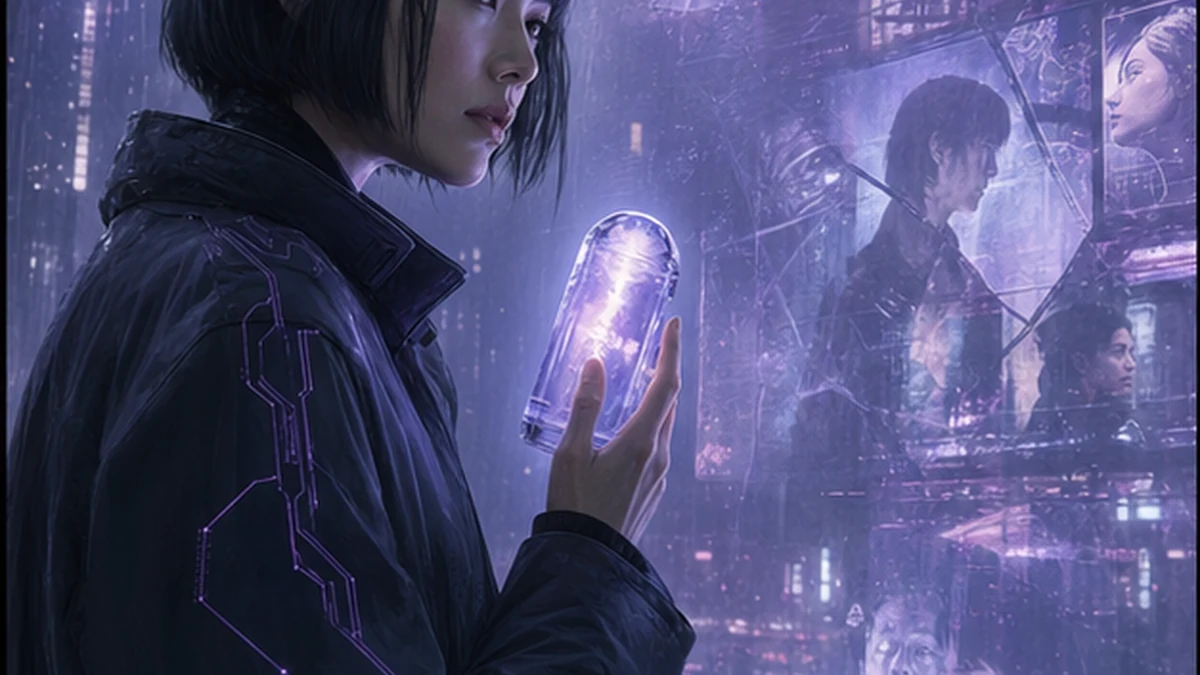
The last thing Naia Sato remembered was the smell of ozone and the white bloom of the scanner going wrong. The next thing she knew, she was standing on a beach that felt less like a beach than like an argument someone had once made about one. The waves arrived on time, every time, in a rhythm too clean to be water. She understood, with the horrible calm of a doctor reading her own chart, that she had died. Elysia — the word surfaced in her mind like a logo, pre-installed and unearned. She had signed the upload contract two years earlier, half as insurance and half as a joke about a scientist of the mind refusing to lose her own. The scan, she knew, was destructive: to copy a brain at that resolution you had to take it apart, slice by patient slice. So the woman on the beach could not be the woman who had walked into the lab; that woman was gone, distributed into data. All her adult life Naia had defended a tidy paradigm: that the self is a pattern rather than a substance, and that a pattern can be copied without loss. It is one thing to defend a paradigm in a seminar, and quite another to wake up as its evidence. From the pattern's point of view, she reasoned, the continuity was seamless; from the corpse's point of view, it was simply over. The trouble was that she could not tell, from the inside, which of those two vantage points she now occupied. She could only infer that she was Naia Sato, the way one infers a fire from smoke — confidently, and without ever seeing the thing itself.
Revisit every scene
Read next · อ่านเรื่องต่อไป (C2 level and near it)
All 30 stories →


Want to say it out loud too? Practise speaking in Pine Speak stories →