TOEIC Listening (Parts 1–4): strategy for a higher score
IELTS specialists — MUIC & Chulalongkorn University alumni, IELTS Speaking Band 9, trained via IDP IELTS teacher courses.
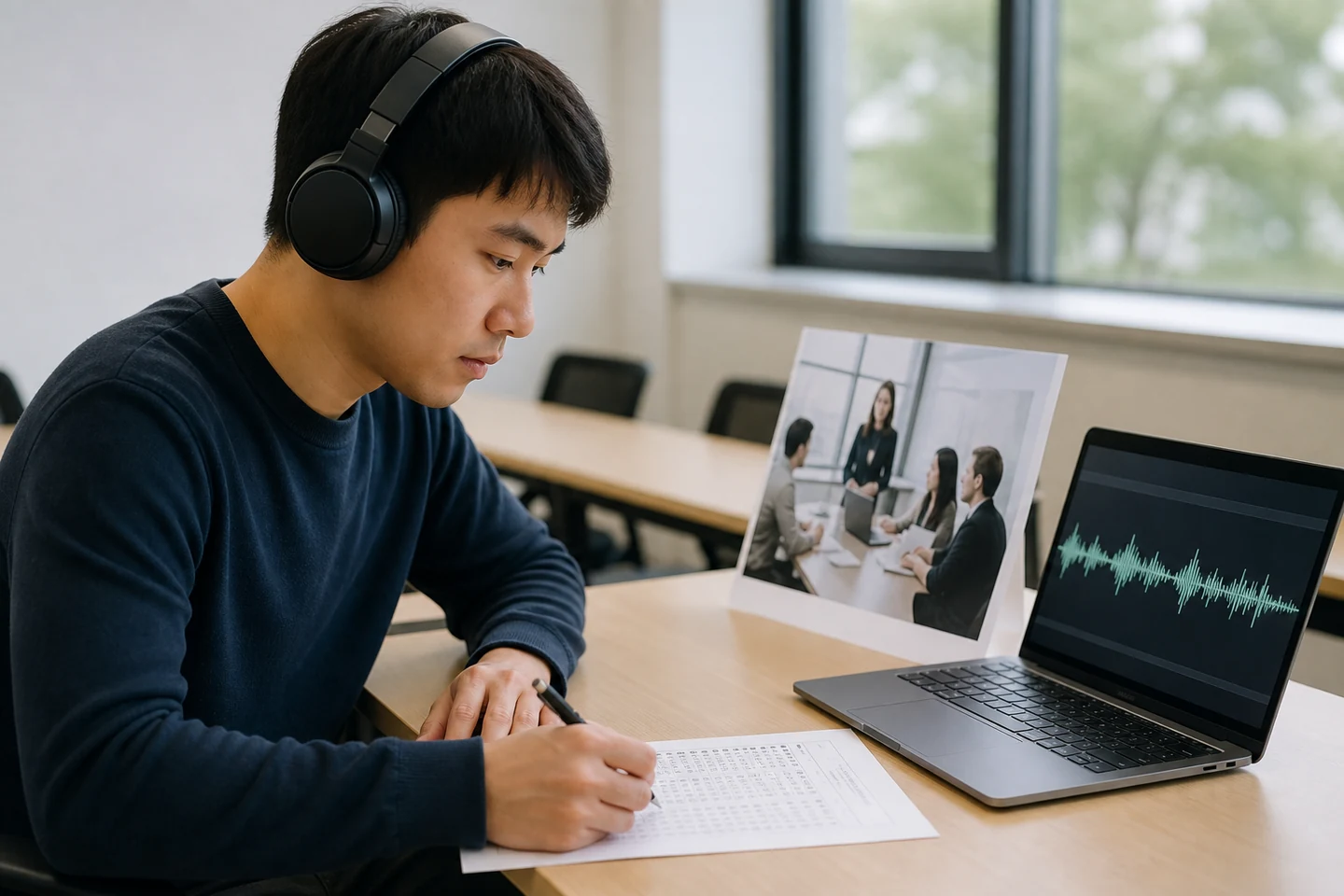
TOEIC Listening has four parts and about 45 minutes of audio that plays only once, so preparation and prediction matter. In Part 1 watch for present-continuous traps on photos; in Part 2 listen for the question word and beware similar-sounding words; and in Parts 3–4 read the questions before the audio starts so you know what to listen for.
Part 1 — photographs
You hear four statements about a picture and choose the best one. The classic traps are wrong verb tense (a described action nobody is doing), similar-sounding words, and objects that aren't in the photo. Focus on who is doing what, right now.

Part 2 — question–response
- Catch the first word: What/Where/When/Who/Why/How usually rules out any yes/no answer.
- Beware repeated or similar sounds — an option echoing a word from the question is often a trap.
- Indirect answers are common: 'Have you finished the report?' → 'I'm still waiting on the figures.'
Parts 3–4 — conversations and talks
Each set has several questions. Read them (and the answer options) during the narrator's instructions so you know what detail to catch — a time, a place, a reason, a next step. Predicting turns listening into confirming.
General listening habits
- The audio plays once — if you miss one, let it go and lock onto the next.
- Watch for paraphrase: the answer rarely uses the exact words you hear.
- Never leave a blank; guess and move on.
Frequently asked questions
Is the TOEIC audio played twice?
No, each recording plays once. That's why reading the questions ahead and predicting the answer is so important.
How long is TOEIC Listening?
About 45 minutes across Parts 1–4, with 100 questions in total.
Which listening part is hardest?
Many find Parts 3 and 4 toughest because they're longer, but reading the questions in advance makes them much more manageable.
Turn the guide into a concrete study plan with free practice, mock tasks and instant feedback.
Trusted by 3,000+ students nationwide · free to start, no card needed