
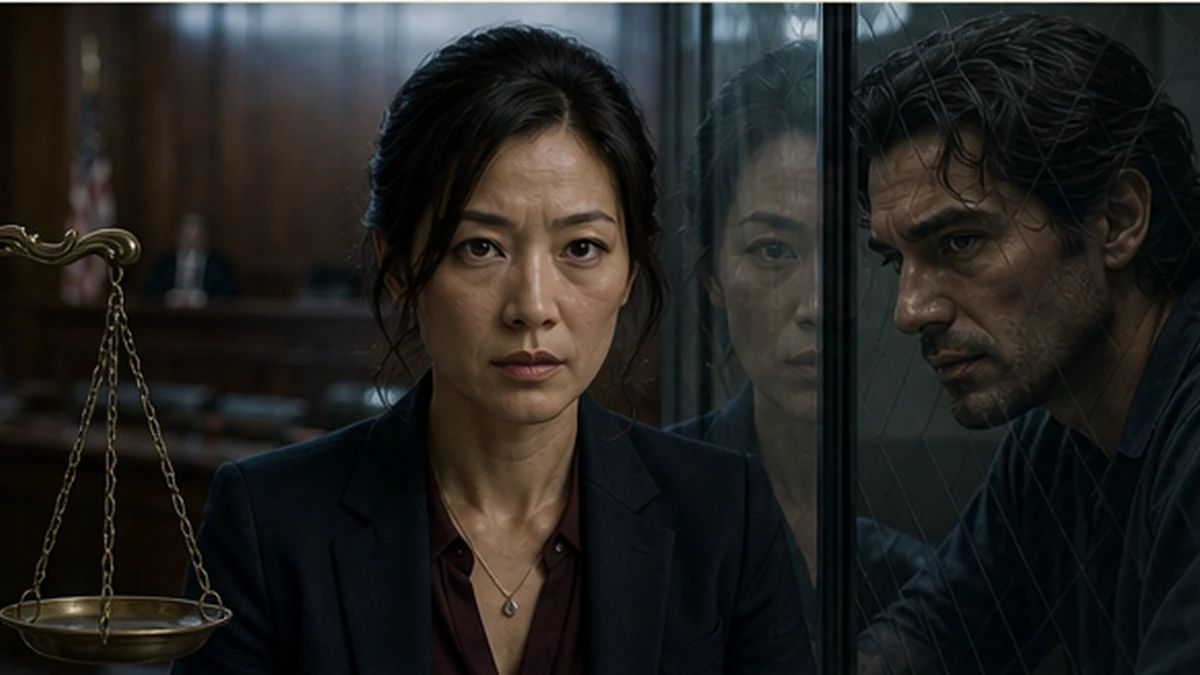
Reasonable Doubt
Maya is a young public defender who believes in the system — until her client leans across the table and confesses. A police error means she can win his acquittal on procedure alone. Winning frees a killer; and the one principle she believed in becomes the thing that corrupts her.
Tap any sentence for Thai
My client leaned across the steel table, lowered his voice, and told me he had done it. "I killed her," Adrian Cole said, as calm as a man ordering coffee. "Now get me out." I was a public defender, three years out of law school, and until that sentence I had believed I was on the side of the innocent. The victim was Elise Marn, twenty-four, found in the river below her apartment with injuries no fall could explain. For weeks I had built my defence on the assumption that Cole was a frightened man wrongly accused. Now that assumption lay in pieces, and my legal duty did not change at all. Under the principles of my profession, every accused person is entitled to a defence, guilty or not. The system relies on defenders who do not judge their clients, because a state that can convict without challenge is a dangerous one. I had recited that principle in interviews as though it were simple; Cole had just made it heavy. His confession was protected, sealed inside the privilege between a lawyer and her client, and I could tell no one. If I did my job well, a man who had killed a young woman would walk back into the daylight. If I did my job badly on purpose, I would betray the one principle that made the whole system just. Cole watched my face, smiled, and said, "You already know you're going to help me" — and the worst part was that he was right.
Revisit every scene
Read next · อ่านเรื่องต่อไป (B2 level and near it)
All 30 stories →



Want to say it out loud too? Practise speaking in Pine Speak stories →